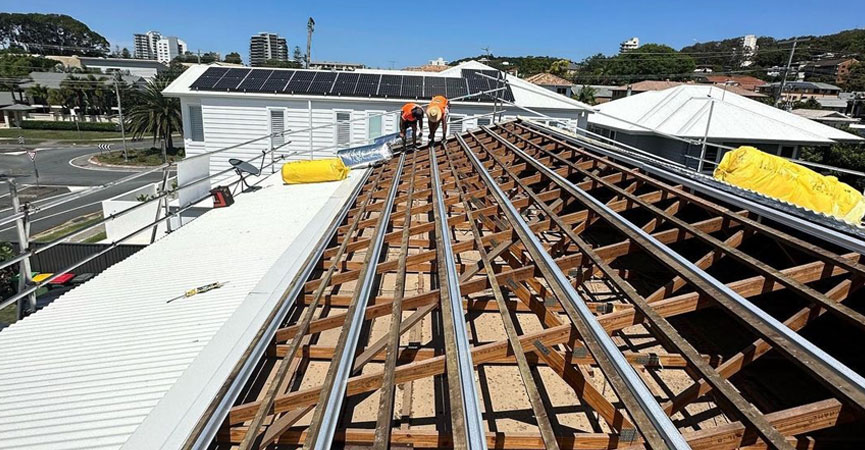
If your roof is doing its job, you barely notice it. But small issues can turn into costly leaks and structural problems fast, wherever you live in Australia. This guide brings together the best practical advice that we’ve developed over the years into one clear checklist to help you understand when your roof needs replacing. We explain everything from when to repair vs restore vs replace, realistic costs, and what happens next.
Quick checklist: 12 clear signs you may need a new roof
- Age of the roof
As a rule of thumb: metal roofs often last 40–70 years, concrete tiles ~30–50 years, terracotta tiles ~50+ (with maintenance), and slate can exceed 100. If you’re in the back half of that range and seeing other symptoms below, organise a professional inspection. - Water stains on ceilings or walls
Yellow/brown patches, peeling paint, or plaster swelling—especially after rain—point to active leaks affecting timbers, insulation and electrics. - Recurring leaks despite repairs
If patches don’t hold, you may have system issues (aged underlays/sarking, failed valleys, degraded flashings) rather than a one-off defect. - Sagging roofline or ripple in the sheets
A dip or wave is a structural red flag. It can indicate prolonged moisture damage, failing battens, or undersized/compromised framing. - Broken, loose or missing tiles
Wind, hail and foot traffic can crack tiles. Gaps let water in and quickly lead to rot and mould. - Rust, corrosion or flaking coatings on metal roofing
Coastal air accelerates corrosion; rural areas can see chemical fallout from agriculture; cities collect contaminants. Widespread rust compromises water-tightness. - Damaged flashing, ridge capping or valley irons
These are common leak points at joins and changes of direction. If they’re loose, split, or poorly sealed, leaks follow. - Storm and hail damage
Dents, punctures, dislodged capping, or wind-lifted sheets/tiles after wild weather are warning signs—even if the leak shows up weeks later. - Mould, mildew or musty smells indoors
Hidden moisture from minor leaks can drive microbial growth long before stains appear. - Discoloured “patches” or persistent algae on the surface
Localised dark zones, unusual streaking or areas that stay damp can signal surface degradation or poor water shedding. - Fading, chalking or brittle materials
When protective coatings break down, materials age faster and become more prone to cracking and leaks. Street appeal also suffers. - Rising energy bills with roof symptoms present
Heat gain or loss through a compromised roof/insulation layer can push up heating and cooling costs. It’s a supporting clue—not a diagnosis on its own.
Repair, restore, or replace?
Not every roof with issues needs a full replacement. Use this simple decision guide:
- Isolated, minor faults on a relatively young roof
Targeted repairs usually make sense (e.g., replace cracked tiles, re-secure flashings, re-seal penetrations). - Widespread cosmetic wear but sound structure
A restoration (repairs + pressure clean + re-point/re-cap + prime/seal + re-coat for tiles; or clean/treat/re-coat for metal) can buy years of service and improve appearance. - Multiple leaks, failing membrane/sarking, or end-of-life materials
Replacement (re-roofing) is often the smarter long-term move. You stop the cycle of call-outs, improve thermal performance with new sarking/insulation, and reset the warranty clock.
When replacement is the smarter investment
- You’re seeing three or more checklist signs at once.
- Leaks keep returning after multiple repairs.
- The roof is at or past typical lifespan.
- You’re planning solar, major insulation upgrades or selling—new roofing can improve efficiency, comfort and street appeal in one go.
Safety note: Avoid climbing on roofs. Ground-level checks and professional inspections keep you safe and protect insurance.
Choosing the Right Roofing Material (and When to Use It)
The “best” roof depends on where you live, how your home is built, and what you value (longevity, cost, appearance, maintenance). Use this quick guide to match materials to Australian conditions and design factors.
1) Climate & location
- Coastal: Salt accelerates corrosion.
Best fit: Marine-grade metal (e.g. appropriate COLORBOND® grade), aluminium, or tiles with stainless fasteners.
Key details: Quality flashings and valley work for wind-driven rain; frequent wash-downs near surf. - Tropical/cyclonic: Intense UV, heavy rain, debris, high winds.
Best fit: High-strength, cyclonic-rated metal with correct screw patterns and tie-downs; breathable sarking.
Key details: Deeper rib profiles for water shedding; storm-resistant capping and secure penetrations. - Bushfire-prone (BAL): Ember attack and radiant heat risk.
Best fit: Non-combustible options: metal, concrete or terracotta tiles — all installed to the property’s BAL with ember guards and sealed gaps.
Key details: Compliant sarking, metal mesh to stop ember entry, careful detailing at ridges and eaves. - Alpine: Freeze–thaw, snow loading, ice damming.
Best fit: Metal roofs designed for snow load with adequate pitch and snow guards; slate works if the structure is engineered for weight.
Key details: Robust underlays, meticulous flashing, clear drainage paths.
2) Roof design & access
- Low pitches: Metal excels (long sheets, fewer laps). Tiles need minimum pitch—check specs.
- Complex shapes / many penetrations: Both systems work, but detailing matters. Tiles allow piece-by-piece access; metal needs precision flashings.
- Heritage streetscapes: Terracotta or slate often suit the brief (and may be council-preferred).
3) Existing structure & build quality
- Weight: Metal is light (good for older frames). Concrete/terracotta tiles and slate are heavier—check battens and framing.
- Underlays & ventilation: Add/upgrade breathable sarking and insulation during re-roofing for comfort and efficiency.
- Previous shortcuts: Poor flashing, inadequate sarking and ventilation show up later as leaks—factor remediation into the scope.
4) Material snapshot—pros, watch-outs & when to choose
- Metal roofing (steel, aluminium, zinc, copper)
Pros: Durable, lightweight, quick to install, suits low pitch, easy for solar, recyclable.
Watch-outs: Choose the right grade/coating in coastal areas; potential hail denting; add acoustic insulation if noise-sensitive.
Choose when: You want modern looks, fast install, low pitch capability, or cyclonic/bushfire performance with the right spec. - Concrete tiles
Pros: Familiar look, solid acoustic performance, individual tiles are replaceable.
Watch-outs: Heavier; occasional cracking; ridge re-pointing over time.
Choose when: You’re replacing like-for-like, value quieter interiors, and have structure to carry the load. - Terracotta tiles
Pros: Premium finish, colourfast longevity, classic street appeal.
Watch-outs: Higher material cost; can crack under impact; skilled installation needed.
Choose when: Aesthetics and long-term colour stability matter (heritage or premium builds). - Slate
Pros: Exceptional lifespan and prestige look.
Watch-outs: Highest cost; heavy; specialist installers; structural allowances required.
Choose when: You’re restoring/creating a premium or heritage home and can engineer for weight.
What happens in a roof replacement?
- Site setup & protection – safety rails/scaffolding, tarps to protect gardens and paths.
- Strip-off – remove old roof materials and compromised battens/flashings.
- Substrate & framing check – repair rotten timbers; confirm ventilation allowances.
- Sarking/insulation – install new breathable sarking and thermal/acoustic batts as specified.
- New roof installation – sheets or tiles installed to manufacturer specs and Australian Standards; correct fixings, overlaps and sealing.
- Flashings, valleys & capping – weatherproof the junctions and ridges; seal penetrations (vents, flues, solar stubs).
- Gutters & fascia (if included) – replace or tie-in to ensure proper water flow.
- Final clean & compliance – remove all debris, complete finishes, provide warranty and documentation.
Your next steps
1. Do a quick ground-level check after the next dry day and after rain.
Take photos of anything new—useful for the insurer and roofer.
2. Book a professional roof inspection.
A licensed roofer will safely assess high-risk areas (valleys, flashings, penetrations, ridge capping) and give a clear repair/restoration/replacement plan.
3. Compare like-for-like quotes.
Ensure each quote includes removal/disposal, new sarking/insulation, flashings/valleys/capping, gutter tie-ins, warranties, and site cleanup. Ask about timelines, weather contingencies and who will be on site.
Ready for peace of mind?
If you’re on the Gold Coast and you’ve spotted any of the warning signs—or you just want a professional check—reach out to Above All Roofing & Construction for a free, no-obligation quote. We’ll inspect, explain your options in plain English, and back our work with quality materials and workmanship. Call 0403 863 347 or request your free quote today.